
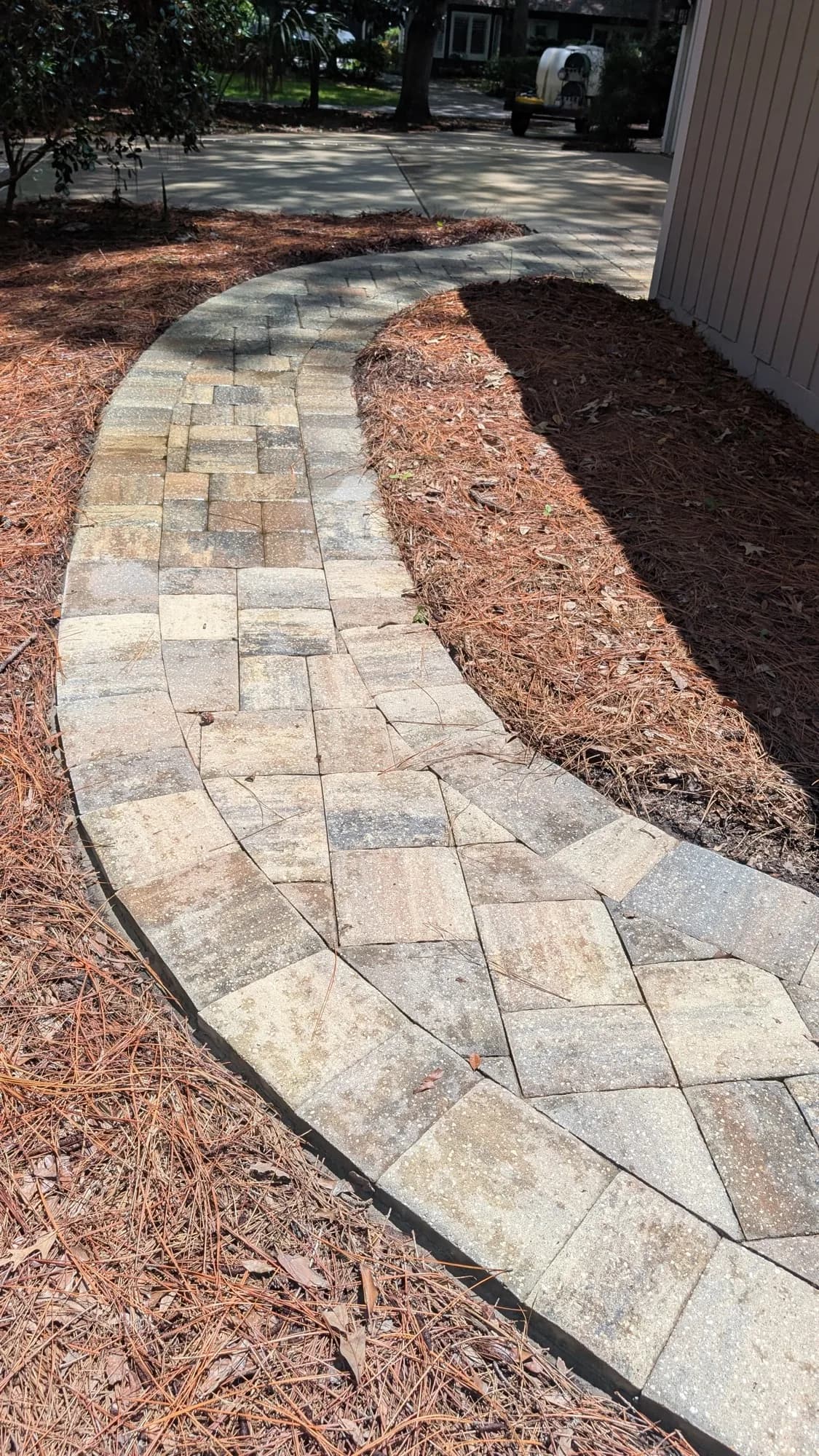
The short answer: pressure washing cleans with high-pressure water and is right for hard surfaces like concrete. Soft washing cleans with specialized solutions at low pressure and is right for delicate surfaces like siding and roofs. Around here, most homes need both, on different surfaces, and knowing which is which saves you from expensive damage.
The two methods get lumped together constantly. People say they are getting their house pressure washed when what it actually needs is a soft wash, and the difference is not semantic. It is the difference between a cleaning that lasts and a repair bill. So here is the plain-English breakdown.
What Pressure Washing Is
Pressure washing uses water at high PSI, often 2,500 to 4,000, to physically blast dirt, grime, and stains off a surface. It is mechanical cleaning: the force of the water does the work. That force is exactly what you want on hard, durable surfaces like concrete driveways, sidewalks, brick, and some pavers. On those surfaces, pressure paired with the right cleaner lifts out years of grime fast and evenly. The same force that cleans concrete beautifully is what makes pressure dangerous on anything softer.
What Soft Washing Is
Soft washing applies a cleaning solution at low pressure, similar to a garden hose, and lets chemistry do the work instead of force. The solution breaks down and kills organic growth like algae, mold, and mildew at the root, then everything gets rinsed away gently. Because the growth is killed rather than sheared off, surfaces stay clean dramatically longer. Soft washing is the correct method for vinyl and Hardie siding, stucco, painted wood, screens, outdoor furniture, and roofs. It is also the method shingle manufacturers specify for roof cleaning, which tells you something.
The Cheat Sheet
- Pressure wash: concrete driveways, sidewalks, brick, and other hard flat surfaces
- Soft wash: house siding of every kind, vinyl, Hardie board, stucco, painted wood
- Soft wash always: roofs, because pressure strips shingle granules and can void warranties
- Soft wash: screened porches, lanais, and anything with screens or delicate trim
- Ask first: decks, fences, and older surfaces, where the right answer depends on condition
Why the Difference Matters So Much in the Lowcountry
In a dry climate, pressure washing a house might just look bad. In Bluffton or Hilton Head, it actively fails. Here is why: the green and black on your siding and roof is living growth, algae and mildew that our humidity feeds year-round. High pressure removes the visible layer and leaves the roots alive in the surface, so regrowth starts immediately. Meanwhile the water you just blasted gets driven behind siding and into window seals, where our humidity keeps it damp and turns it into hidden mold. Soft washing kills the growth at the root with low pressure, so the clean lasts and nothing gets forced where it should not go.
How to Tell What Your Home Needs
Look at the surface, not the dirt. Green or black film on siding, trim, porch ceilings, or the roof: soft wash. Ground-in grime, dark blotching, and slick mildew on the driveway or sidewalks: pressure washing with a surface cleaner for an even finish. Most full exterior jobs we do in the Lowcountry are a combination, soft wash on the house and porch, pressure on the concrete. Any company that proposes blasting your whole property with one machine at one setting is telling you they own one machine.
The Question to Ask Any Contractor
Ask them directly: what pressure will you use on my siding, and what will you use on my roof? The correct answers are low pressure with a treatment on the siding, and no pressure, soft wash only, on the roof. If the answer to either is some version of just turning the machine down a little, keep shopping.
And if a contractor insists one method handles everything, that is your cue to ask follow-up questions. The honest answer in our climate is almost always a combination: chemistry where things live, force where things stick.
Want a straight recommendation for your place? Call or text Bob at 843-321-9345 for a free quote. We will walk the property, tell you which surfaces need which method, and explain exactly why.