
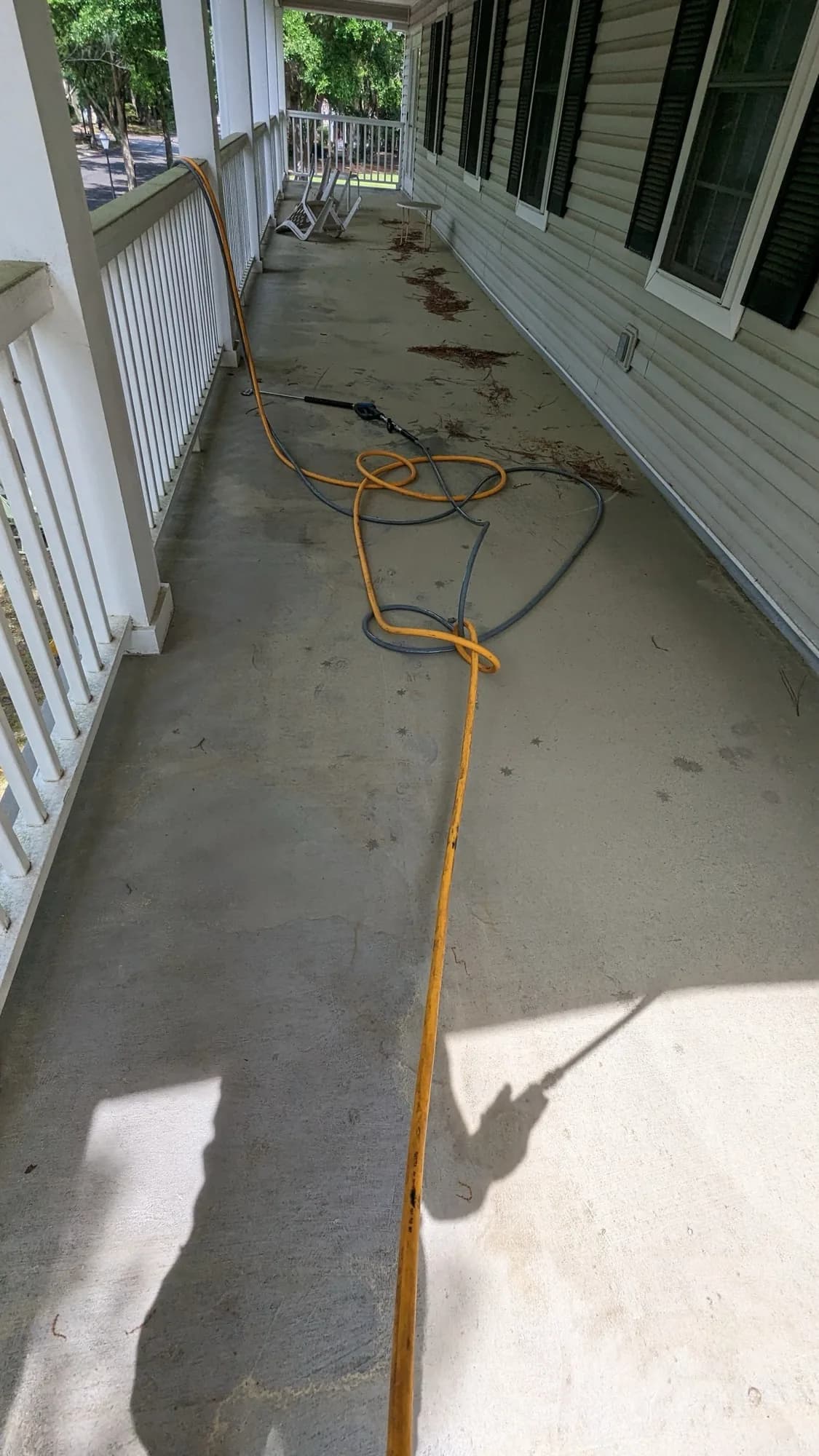
The honest answer: most DIY pressure washing goes wrong in one of seven predictable ways, and several of them cost more to fix than a professional wash would have cost in the first place. If you are going to do it yourself, avoid these. If you would rather not risk it, that is what we are here for.
A rental machine from the hardware store is a real tool, not a toy. Consumer units run 2,000 to 3,000 PSI, which is enough to carve lines in concrete, shred window screens, strip paint, and force water places water should never go. The machine is rarely the problem. The operator is.
Mistake 1: Using High Pressure on Siding
Vinyl, Hardie board, and stucco are not meant to be blasted. High pressure cracks vinyl, chips paint, and on stucco it can knock the finish coat right off. Worse, it does not actually kill the algae and mildew growing on your walls. It shears off the visible top layer and leaves the roots behind, so the green comes back in weeks. The right method for siding is soft washing: low pressure with a cleaning solution that kills growth at the root.
Mistake 2: Spraying Upward Under the Laps
Siding is designed to shed water running down, not water fired up. Aim a wand upward and you push water behind the siding, into the wall cavity, and around window frames. In our humidity, that trapped moisture can sit for weeks and turn into mold you cannot see. Always spray level or slightly downward, and keep distance from seams, vents, and weep holes.
Mistake 3: Pressure Washing the Roof
This is the expensive one. High pressure strips the protective granules off asphalt shingles, and every granule you remove shortens the life of the roof. Some homeowners also void their shingle warranty this way without knowing it. Those black streaks on Lowcountry roofs are gloeocapsa magma, an algae, and the correct fix is a low-pressure roof cleaning treatment that kills it, not a blast that scatters it.
Mistake 4: Etching the Concrete
Concrete is tough, but it is not invincible. Hold a tight nozzle too close or dwell too long in one spot and you carve permanent lines and swirl marks into the surface. We see etched driveways all over Bluffton and Hilton Head where someone got halfway across the slab before realizing the wand was leaving stripes. The marks do not fade. Even, overlapping passes with the right tip and distance, or better a surface cleaner, is how concrete gets cleaned without scars.
Mistake 5: Skipping the Detergent
Water alone moves dirt around. It does not kill anything. In a climate where green algae regrows fast, a water-only wash is a temporary rinse at best. A proper cleaning solution does the actual work: it breaks down organic growth so it can be rinsed away at low pressure, and it keeps surfaces clean longer because the roots are dead. Pressure is the delivery system, not the cleaning agent.
Mistake 6: Ignoring Plants, Electrical, and Neighbors
- Wet down landscaping before and after so cleaning solution does not burn plants
- Cover or avoid outdoor outlets, light fixtures, and electrical meters
- Watch where the runoff goes, especially toward a neighbor's fresh mulch or clean driveway
- Never spray people, pets, or yourself; a pressure washer can cut skin at close range
Mistake 7: Doing It Once and Calling It Done
Even a decent DIY wash fades fast here if the growth was not killed. That is why so many Lowcountry driveways look clean for a month and green again by the next. The fix is not more pressure. It is the right chemistry, the right method for each surface, and a realistic schedule. Siding and porches want soft washing. Concrete and pavers can take pressure. Roofs should never see pressure at all.
One last consideration: time. A full driveway, house, and patio done right is most of a weekend with rental pickup, setup, the work itself, and the return trip. Multiply the value of your Saturday accordingly before you decide the DIY route is the savings play.
If that sounds like more nuance than you wanted from a weekend project, fair enough. Call or text Bob at 843-321-9345 for a free quote. We will tell you honestly what your place needs, whether that is pressure washing, soft washing, or both.